
Controlling humidity is a fundamental requirement in industrial environments — from cold storage and manufacturing floors to laboratories and archives. While many dehumidification technologies exist, industrial desiccant dehumidifiers stand out in environments with low temperatures, strict dew-point requirements, and critical moisture control demands. In this article, we’ll explore the core principles of desiccant dehumidification, why this technology excels in cold conditions, and how the ATZ series desiccant dehumidifiers from ANT dehumidifier team deliver dependable performance for industrial applications.
An industrial desiccant dehumidifier is engineered to remove moisture from air using a hygroscopic material — typically a silica-gel based desiccant wheel — that adsorbs water molecules directly from air streams. Unlike traditional compressor-based dehumidifiers that rely on cooling coils and condensation, desiccant units extract moisture at a molecular level, making them inherently more effective in environments where low dew points and low ambient temperatures challenge refrigerant systems.
This technology delivers stable, high-capacity drying even when ambient temperatures fall below what compressor systems can handle, often as low as -10 °C or lower in some configurations.
At the heart of desiccant dehumidification is a rotary desiccant wheel:
Process Air: Moist ambient air passes through the desiccant wheel, where water vapor adheres to the porous surface of the desiccant material.
Regeneration Air: Concurrently, a heated air stream passes through another section of the wheel to remove the adsorbed moisture, regenerating the desiccant for continuous operation.
The wheel’s design ensures continuous cycling between adsorption and reactivation phases, enabling 24/7 dehumidification without moisture build-up or frost issues common in refrigerant systems.
Industrial environments often require drying performance where traditional dehumidifiers can’t deliver. Here’s why desiccant technology is the preferred choice:
Refrigerant dehumidifiers rely on chilled coils to condense water. As temperatures drop, coils are prone to icing and efficiency loss — often failing below ~10–15 °C. Desiccant systems, however, are unaffected by temperature-related coil issues and continue extracting moisture effectively at low temperatures, making them ideal for cold storage, winter construction, unheated warehouses, and outdoor industrial sites.
Desiccant dehumidifiers can achieve significantly lower dew points and more aggressive humidity reduction than refrigerant systems. This deep drying capability is crucial for:
Precision manufacturing
Electronics assembly
Pharmaceutical production
Battery storage
Museums and archives
These applications often require stable low humidity even when ambient temperatures swing widely.
Industrial desiccant dehumidifiers are built for continuous duty. With fewer temperature-sensitive components and self-regenerating desiccant wheels, these systems maintain moisture removal rates with minimal performance degradation over long operating periods — critical for mission-critical industrial environments.
Desiccant systems incorporate robust materials and airflow designs suitable for dusty, cold, or variable environments, reducing downtime and maintenance compared with refrigeration-dependent units.
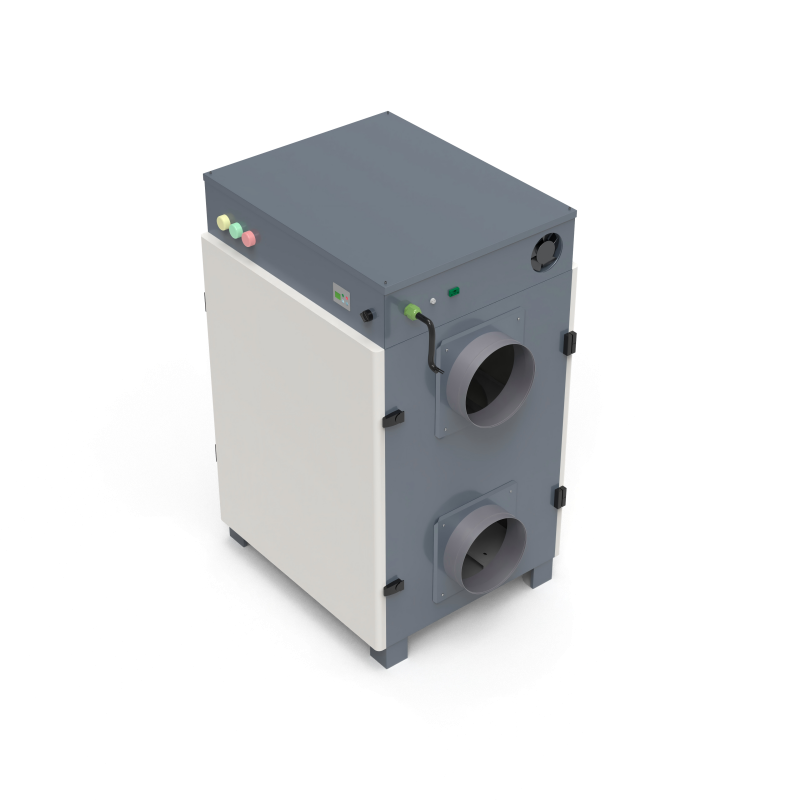
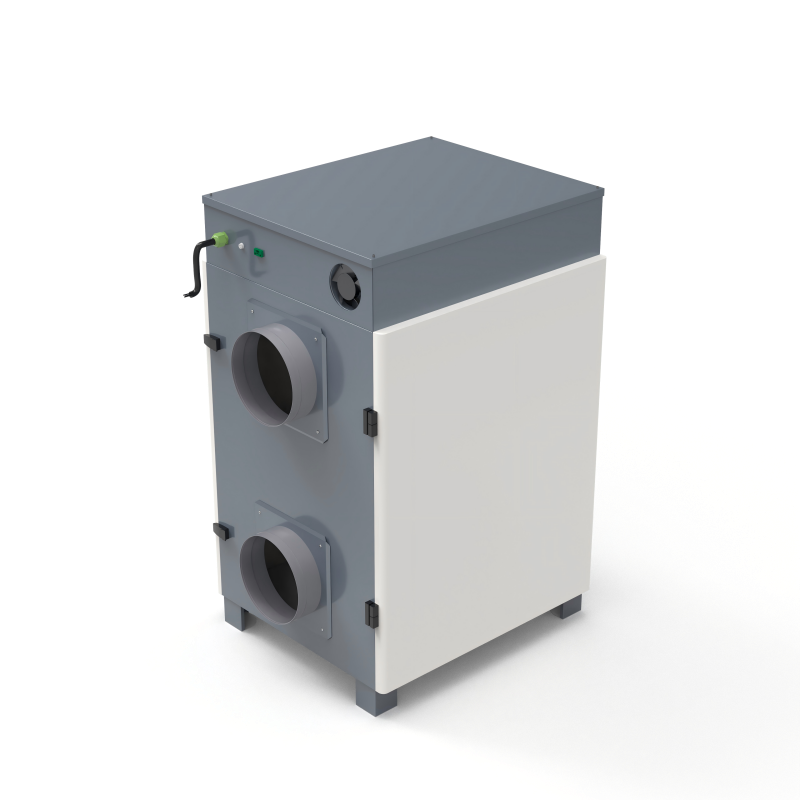
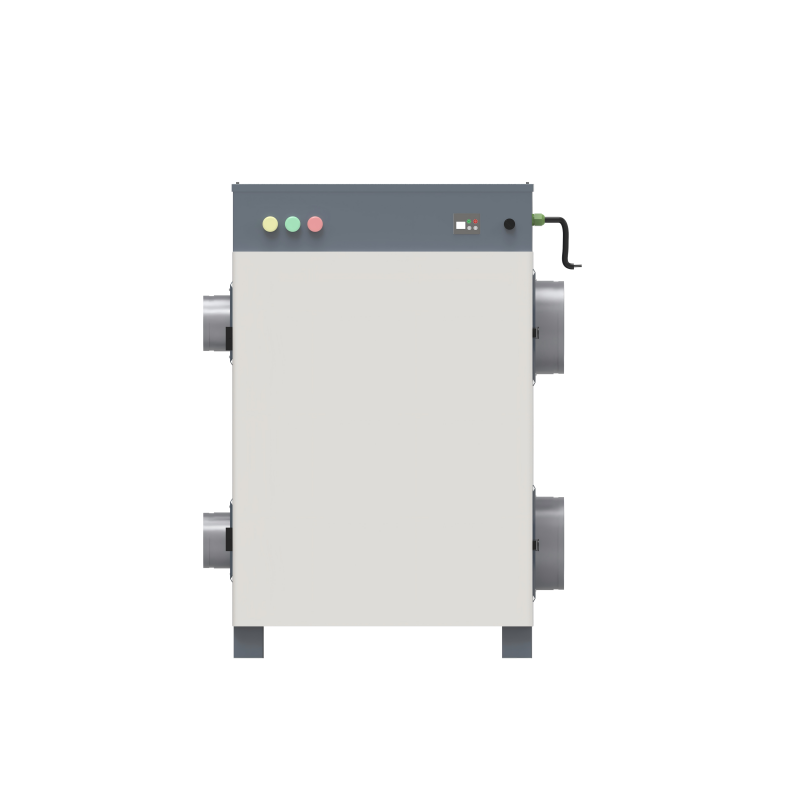
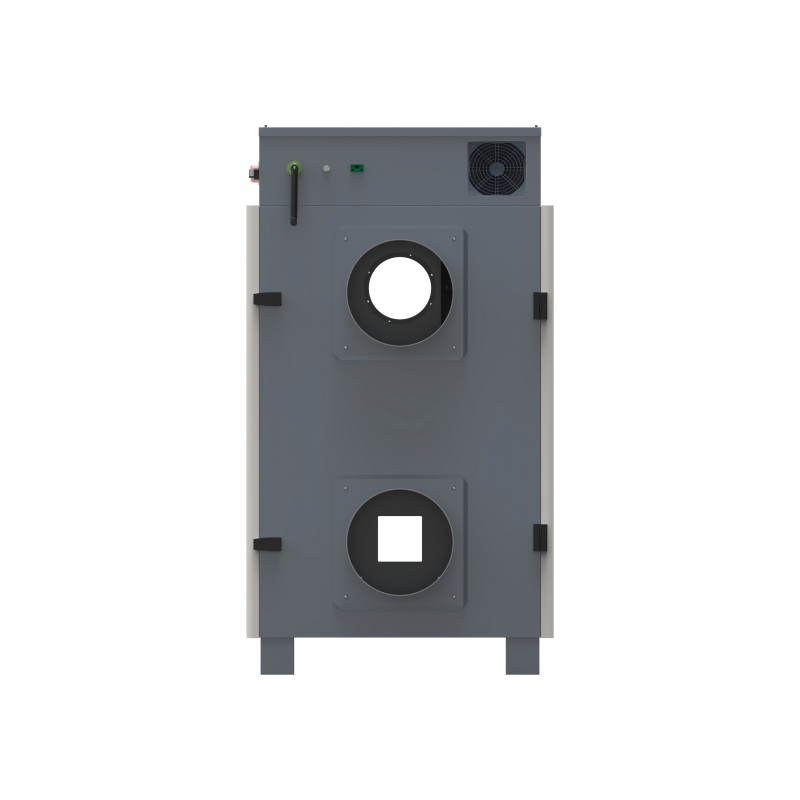
Our ATZ series desiccant dehumidifiers are designed specifically for industrial and commercial humidity-control challenges. Built with a full range of capacities and configurations, the ATZ lineup delivers reliable moisture control from small areas to large industrial spaces.
The ATZ series scales from compact units like the ATZ-120 and ATZ-190 up through powerful industrial models such as the ATZ-1550 and ATZ-3050, providing dehumidification capacities from roughly 0.4 kg/h up to 19 kg/h and process airflows from 120 m³/h to over 3000 m³/h.
All ATZ series machines are rated for an operational temperature range down to approximately -10 °C, ensuring effective performance in cold conditions where vapor-compression units struggle.
Compact portable options provide mobility and targeted humidity control in small spaces or temporary installations.
Heavy-duty industrial models like the ATZ-1550 and ATZ-3000 deliver substantial airflow and dehumidification capacity for factories, warehouses, and large storage areas.
Optional features such as remote control interfaces, washable filters, and customizable configurations support diverse application requirements.
Constructed with industrial-grade components — including high-efficiency desiccant rotors and customizable filtration systems — the ATZ series is engineered for durability and long service life, even in challenging work environments.
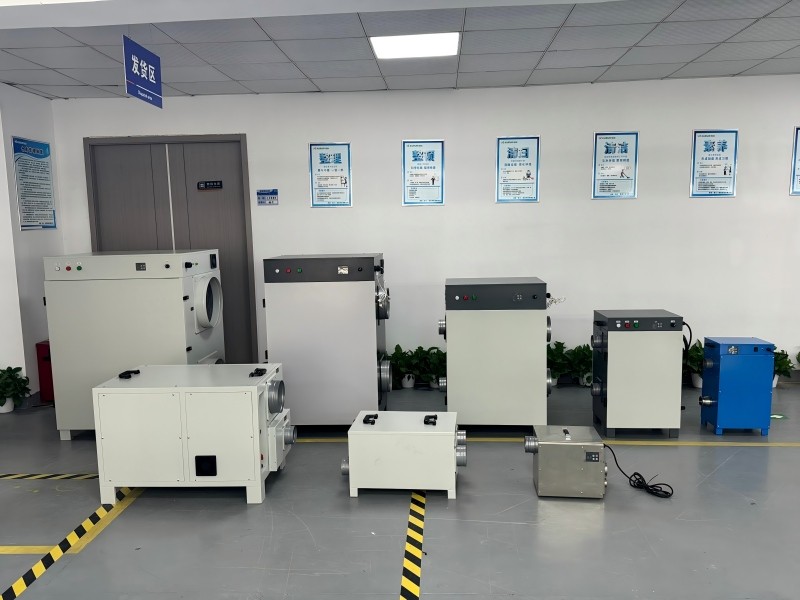
Because of their low-temperature reliability and deep dehumidification capability, industrial desiccant dehumidifiers — especially the ATZ series — are ideal for:
Cold storage facilities
Unheated warehouses and logistics hubs
Industrial coating and curing processes
Electronics manufacturing and cleanrooms
Battery and energy storage systems
Museums, archives, and sensitive storage vaults
These environments demand consistent humidity control, regardless of seasonal or ambient temperature variations.
Industrial desiccant dehumidifiers are the most effective solution for environments where low temperatures or aggressive moisture control are key operational requirements. Their adsorption-based design ensures continuous, reliable performance where refrigerant systems fall short. The ATZ series desiccant dehumidifiers from ANT dehumidifier team bring this advanced dehumidification technology to industrial and commercial users with a range of capacities, robust construction, and low-temperature adaptability — making them an ideal choice for your humidity-control challenges.
To explore the ATZ series in detail and find the right model for your application, visit our Desiccant Dehumidifier product page
Previous: None.
Next: DTH Hammer
Copyright:@2020-2021

Comments Please sign in or sign up to post.
0
0 of 500 characters used