
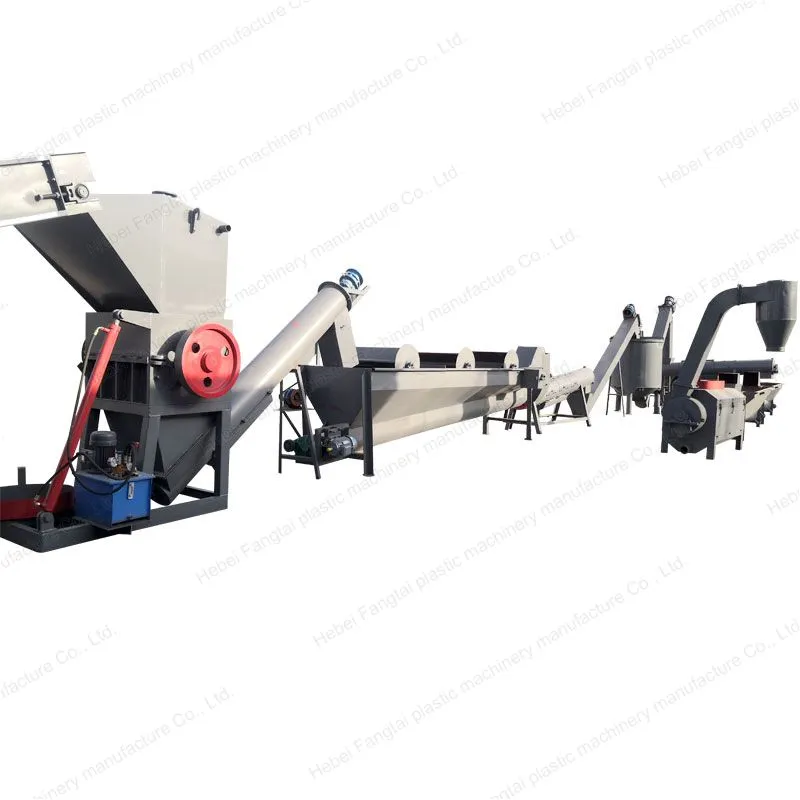
The PET bottle washing line is an advanced system designed to convert post-consumer PET bottles into clean, reusable PET flakes through a series of mechanical and chemical processes. These lines utilize technologies such as sorting, rinsing, crushing, and drying to remove contaminants and prepare the PET material for recycling. The workflow includes several steps that improve the cleanliness and quality of the final PET flakes, making them suitable for a variety of industrial applications.
Collection and Sorting of PET Bottles
Collection from various sources such as recycling centers, municipal waste systems, or bottle drop-off locations.
Sorting by size, color, and label type to ensure uniformity for processing.
Pre-washing Procedures
Initial rinsing of bottles to remove contaminants and residues.
Use of hydraulic and mechanical techniques to separate non-PET material.
Crushing and Shredding
Bottles are crushed into small flakes to facilitate further washing.
Shredding enhances surface area for cleaning, ensuring effective contaminant removal.
Main Washing Process
Hot water and detergents are used to wash the flakes thoroughly.
Continuous agitation helps in the removal of labels, glues, and other contaminants.
Drying and Quality Control
Flakes are dried using centrifuge and hot air to remove moisture.
Final quality checks ensure that the PET flakes meet industry standards before distribution.
Manufacturing of New PET Products
Flakes are melted and remolded to produce new bottles, containers, and other consumer goods.
Textile and Fiber Production
Recycled PET flakes are spun into fibers for clothing and upholstery.
Construction Materials
Incorporation of PET flakes in composite materials enhances durability.
Environmental Benefits
Reduces landfill waste by recycling millions of PET bottles each year.
Saves energy compared to producing new PET from raw materials.
Economic Opportunities
Transform waste into valuable resources, creating jobs in recycling industries.
Conveyor Systems
Automates the transfer of bottles and flakes throughout the washing process.
Washing Equipment
Includes tanks, mixers, and spray bars designed for optimal cleanliness.
Dryers and Separators
Efficiently remove moisture and sort flakes based on size and quality.
Size and Scale of Operation
Determine facility size based on processing volume and business objectives.
Investment in Technology
Evaluate costs vs. benefits of advanced washing technologies for efficiency.
Advancements in Technology
Innovation in washing techniques to increase efficiency and reduce waste.
Market Demand for Recycled Materials
Growing consumer preference for eco-friendly and sustainable products enhances demand for recycled PET.
Regular Maintenance of Equipment
Implement a maintenance schedule to reduce downtime and ensure optimal performance.
Staff Training Programs
Train staff on best practices for operating and maintaining PET washing lines.
The PET flakes washing line is a vital component of the recycling industry, converting waste into high-quality materials that serve a multitude of industrial purposes. By understanding the working principles and operational efficiencies of these washing lines, businesses can effectively contribute to sustainable practices while generating economic value.
Previous: What an 800kW 1000kVA Cummins Diesel Generator Actually Delivers Under Load
Next: How to extend the service life of crawler excavator undercarriage
Copyright:@2020-2021

Comments Please sign in or sign up to post.
0
0 of 500 characters used