
Mechatronics training equipment refers to specially designed educational tools and systems that provide hands-on learning experiences in mechanical, electrical, electronic, and computer systems integration. These systems simulate real-world industrial scenarios, enabling learners to gain practical skills in automation, robotics, control systems, PLC programming, sensors, actuators, and embedded systems.
Training equipment is the foundation of STEM-based vocational training programs, especially in technical schools, engineering colleges, and industrial training institutes.
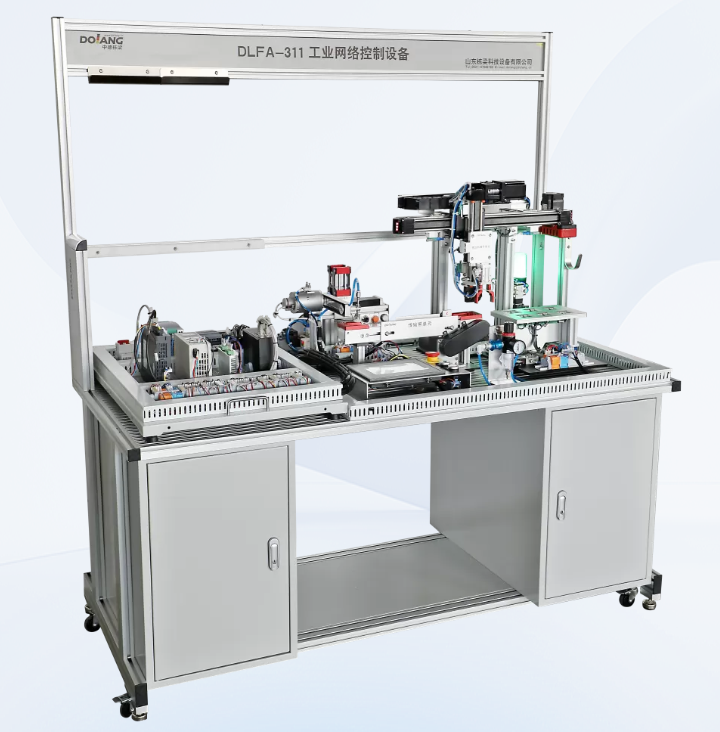
In today’s world, industries demand multi-skilled professionals. As Industry 4.0 transforms the manufacturing landscape, mechatronics has emerged as a key discipline. The integration of multiple engineering domains requires a practical learning environment, which only state-of-the-art training equipment can provide.
Students learn how various systems communicate and function together in real-time. Mechatronics kits and workbenches are designed to replicate actual industrial operations, including robotic arms, conveyor belts, pneumatic systems, and PLC-controlled machines.
Learners trained on modern equipment are job-ready. They gain direct exposure to tools used in smart factories, automated production lines, and intelligent systems.
PLC modules are the backbone of industrial automation. Training equipment integrates Siemens, Allen-Bradley, or Mitsubishi PLCs with user-friendly interfaces. Students learn ladder logic, HMI interface development, and troubleshooting.
These include proximity sensors, photoelectric sensors, temperature sensors, servo motors, pneumatic cylinders, and hydraulic actuators. Learning how to program and wire these components is essential for real-world system automation.
Training kits come with multi-axis robotic arms, grippers, and vision systems. Learners develop skills in robot programming, pick-and-place automation, and machine vision integration.
These modules teach the fundamentals of fluid mechanics and power systems. Learners design and implement circuits involving compressors, control valves, pneumatic actuators, and hydraulic pumps.
Equipped with breadboards, oscilloscopes, signal generators, and microcontrollers like Arduino and Raspberry Pi, these boards teach circuit design, debugging, and embedded programming.
Ideal for beginners, these include modular benches, interface boards, and simulation software. Suitable for high schools and introductory college courses.
For in-depth learning, these systems replicate industrial assembly lines, featuring multiple subsystems, networked controllers, and SCADA interfaces.
Compact and cloud-based systems allow flexible learning. Virtual labs offer remote access to simulated automation environments, ideal for distance education.
Institutes can align their curriculum with global skill standards such as NSQF, NATEF, or ABET, making their programs more competitive and relevant.
Modern training systems attract collaborations with OEMs, system integrators, and automation companies, providing opportunities for internships and placements.
Equipment can be tailored to industry-specific needs like automotive mechatronics, smart grid systems, or packaging automation, giving learners niche expertise.
Engineering and polytechnic colleges use this equipment for project-based learning, lab assignments, and skill certifications.
Industries use portable kits for employee upskilling, automation workshops, and maintenance training.
National and regional bodies adopt this technology for youth training initiatives, vocational education schemes, and entrepreneurship support in manufacturing sectors.
Festo Didactic
Amatrol
Lucas-Nülle
Yaskawa Education Solutions
Intelitek
MikroElektronika
Tech-Labs
Each brand offers customizable solutions to suit various education levels and industry requirements.
Ensure the system is compatible with current industrial tools and can be upgraded over time.
Look for modular kits that allow gradual skill development from basic to advanced levels.
Support for industry-grade programming environments, SCADA, and simulation tools is essential.
Opt for systems with short-circuit protection, emergency stop, and fault detection modules to ensure student safety.
Choose vendors who provide installation support, teacher training, and curriculum-aligned lesson plans.
Mechatronics training equipment is more than just a teaching tool—it’s a gateway to innovation, career readiness, and technical excellence. As global industries evolve, so must the education systems that feed into them. Institutions that invest in quality, future-ready mechatronics labs will not only produce skilled graduates but will also become centers of excellence for industrial training.
Previous: Is a Laser Cutter the Right Tool for Your Creative or Business Needs?
Next: A brief introduction of packaging machines application and working principles
Copyright:@2020-2021

Comments Please sign in or sign up to post.
0
0 of 500 characters used