
Ratchet straps, also known as tie-down straps, are essential tools for securing loads during transport. Whether you're hauling goods in a truck or securing items on a trailer, knowing how to use ratchet straps correctly is crucial for both safety and efficiency. Let's walk through a step-by-step guide to ensure you're harnessing the full potential of these versatile tools.
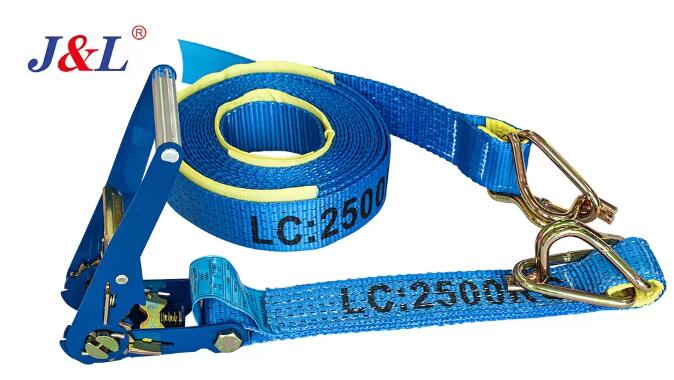
Before you begin, inspect the ratchet straps for any signs of damage or wear. Check the webbing for cuts, fraying, or abrasions, and examine the ratchet mechanism for proper functioning. If you identify any issues, replace the strap to ensure the reliability of the tie-down.
Select a ratchet strap that matches the size and weight of the load you are securing. The working load limit (WLL) indicated on the strap provides guidance on the maximum load the strap can handle. It's crucial to choose a strap with a WLL that exceeds the weight of your load.
Identify suitable anchor points on the vehicle or trailer to secure the load. Anchor points should be robust and capable of withstanding the force applied by the ratchet straps. Avoid attaching the straps to weak or unstable points that may compromise the integrity of the tie-down.
Thread the loose end of the ratchet strap through the mandrel of the ratchet mechanism. Pull the strap through until there is enough tension to hold the load securely. Ensure that the strap lies flat and is not twisted or tangled.
Operate the ratchet mechanism by raising and lowering the handle. This action tightens the strap around the load. Continue ratcheting until the strap is snug and the load is securely fastened. Be cautious not to over-tighten, as this may damage the strap or the load.
Once the ratchet strap is tightened, secure any excess length of strap to prevent it from flapping in the wind during transport. Some ratchet straps come with built-in mechanisms or loops for this purpose. Alternatively, you can use Velcro straps or other means to manage excess length.
After securing the load, perform a final check to ensure that the ratchet straps are properly tensioned and the load is securely fastened. Confirm that all anchor points are secure and that there are no visible signs of slippage or loosening.
When you reach your destination and it's time to unload, release the tension on the ratchet strap by opening the ratchet mechanism. Carefully unwind the strap from the load and store it in a clean, dry place. Inspect the strap again for any damage before storing it for future use.
In conclusion, using ratchet straps involves a systematic process to ensure the safety and security of your load during transport. Regular inspection, proper selection, and careful application of these versatile tools contribute to successful and efficient tie-downs.
Having covered the fundamental steps for safely and effectively using ratchet straps, it's important to understand how they fit into a broader ecosystem of cargo securing and recovery equipment. While ratchet straps are ideal for securing loads during transportation, there are situations where alternative or complementary tools—such as strength wire rope, nylon straps with hooks, and truck recovery straps—are better suited to the task at hand. Each of these products brings unique mechanical properties and safety advantages, especially when dealing with dynamic forces, heavy industrial loads, or off-road recovery scenarios.
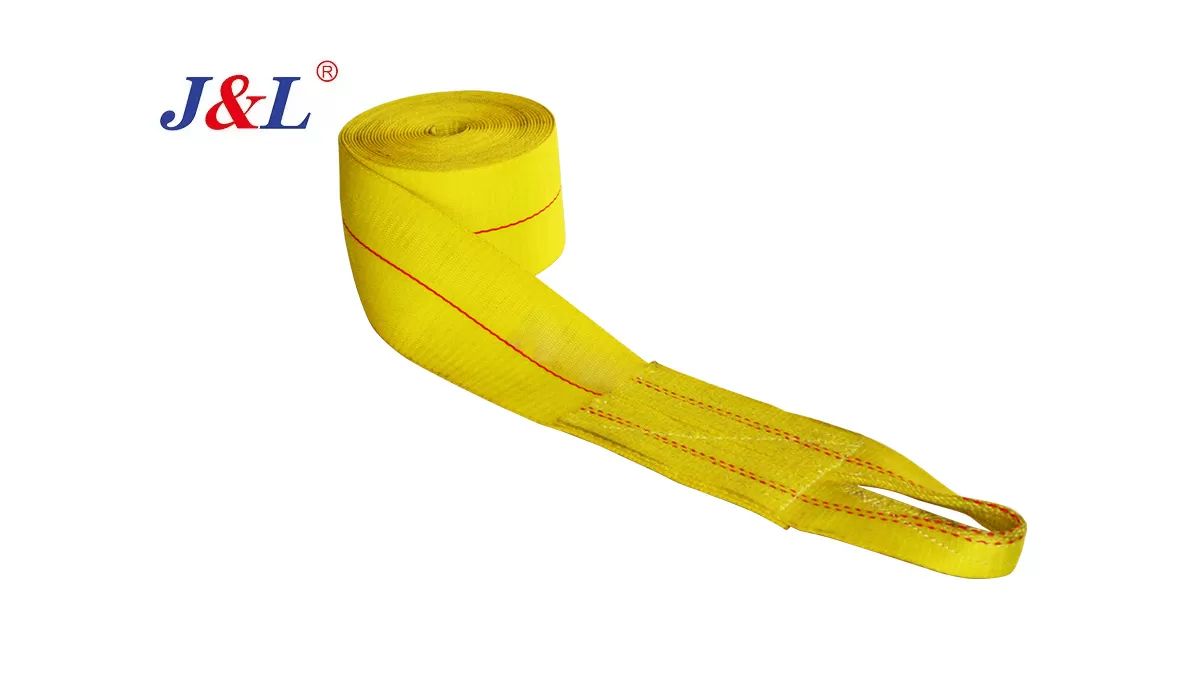
While webbing-based ratchet straps offer excellent grip and ease of use, they may not be sufficient when securing extremely heavy or sharp-edged cargo. In such cases, strength wire rope becomes an indispensable alternative. Wire rope is constructed from high-tensile steel strands wound around a central core, providing exceptional resistance to cutting, abrasion, and environmental degradation. It is commonly used in rigging applications where durability under extreme stress is paramount.
For example, when securing steel beams, machinery, or construction materials with rough edges, standard polyester or nylon ratchet straps can quickly fray or fail. Here, strength wire rope slings—often paired with ratchet tensioners or turnbuckles—provide a far more robust solution. Juli Sling Co., Ltd. manufactures precision-engineered wire rope slings that meet international safety standards, including ISO 4878 and ASME B30.9. These slings are available in various configurations—single, double, or multi-leg—and are ideal for lifting and securing applications in the energy, maritime, and infrastructure sectors.
Moreover, wire rope can be integrated into hybrid tie-down systems. For instance, a ratchet strap can be used in conjunction with a wire rope bridle to distribute load forces more evenly across a wide or irregularly shaped object. This combination leverages the adjustability of the ratchet mechanism with the tensile strength of steel wire, ensuring maximum safety during transport.
While traditional ratchet straps use metal hooks made from galvanized or zinc-coated steel, the performance of the strap itself can be significantly enhanced by using nylon straps with hooks. Nylon, as a synthetic fiber, offers superior strength-to-weight ratio, excellent resistance to UV degradation, and greater elasticity compared to polyester—a common material in standard ratchet straps.
Nylon straps with hooks are particularly effective in environments where temperature fluctuations, moisture, or chemical exposure are concerns. Their inherent resistance to mildew and rot makes them ideal for marine transport, outdoor storage, and military logistics. Additionally, the slight stretch in nylon provides a degree of shock absorption during transit, reducing the risk of sudden load shifts or strap failure due to jolts and vibrations.
Juli Sling Co., Ltd. offers a range of nylon tie-down straps with reinforced S-hooks or J-hooks, designed for both static securing and dynamic recovery applications. These hooks are forged from high-grade alloy steel and undergo rigorous testing to ensure they can withstand the full working load limit (WLL) of the strap. The combination of high-strength nylon webbing and precision-forged hardware makes these straps ideal for securing vehicles on flatbed trucks, stabilizing equipment on shipping containers, or anchoring temporary structures at construction sites.
It's important to note that while nylon offers many advantages, its elasticity requires careful handling. Over-tightening a nylon strap can lead to excessive tension buildup, which may relax over time and compromise load security. Therefore, periodic re-tensioning during long-haul transport is recommended when using nylon-based systems.
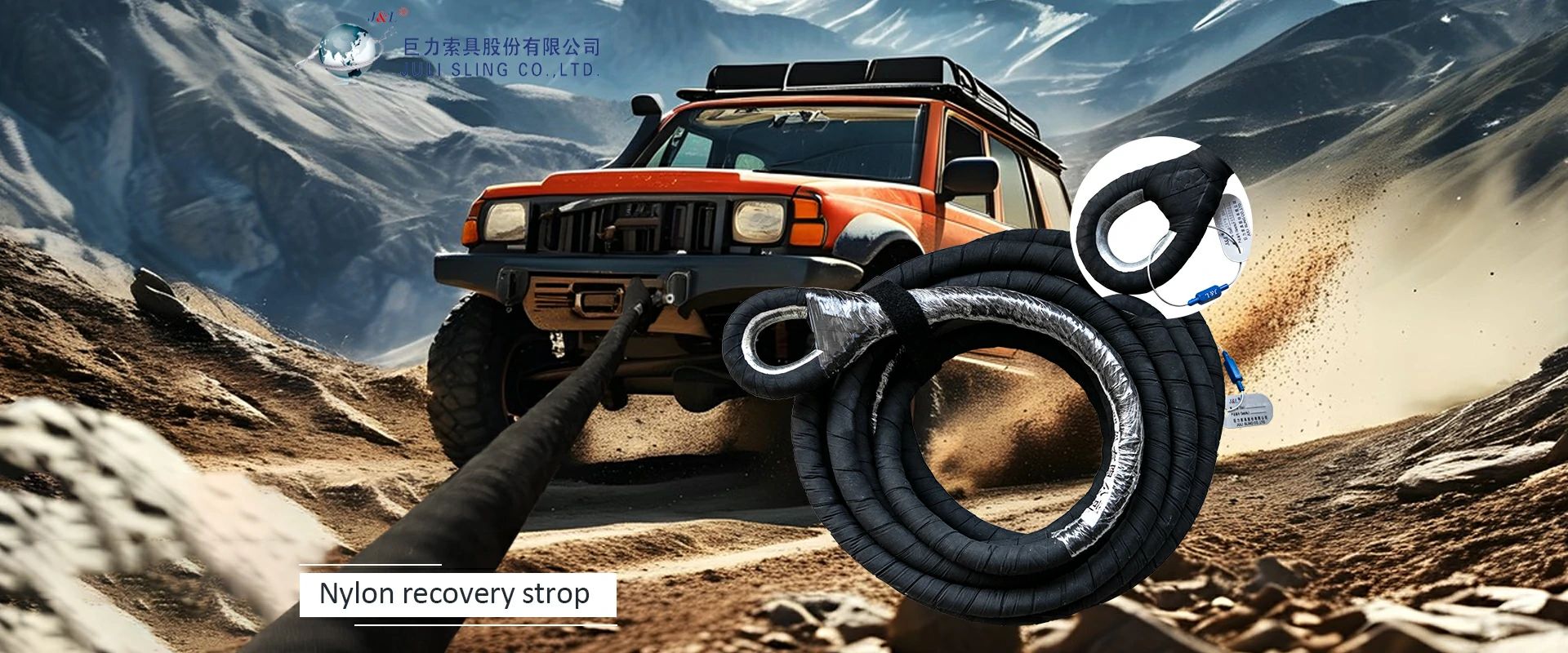
Beyond routine cargo securing, another vital application of strap technology lies in emergency vehicle recovery. This is where truck recovery straps—also known as kinetic recovery ropes or snatch straps—come into play. Unlike static ratchet straps, recovery straps are specifically designed to stretch under load, storing kinetic energy that helps pull a stuck vehicle free from mud, sand, or snow.
These straps are typically made from high-elongation nylon, capable of stretching up to 20–30% of their length under tension. This elasticity mimics the function of a rubber band, allowing for a smooth, controlled pull that reduces stress on both vehicles and recovery points. In contrast, using a rigid chain or non-elastic rope can result in dangerous snap-back if failure occurs, posing a serious risk to personnel.
Juli Sling Co., Ltd. produces industrial-grade truck recovery straps that are engineered for reliability in extreme conditions. Each strap features reinforced eyes with protective sleeves to prevent fraying, and comes with a clearly marked WLL and safety instructions. Available in multiple lengths and capacities—from 8,000 lbs to over 20,000 lbs—they are widely used by off-road enthusiasts, military units, and disaster response teams.
When deploying a truck recovery strap, safety is paramount. Always ensure that all connection points (such as D-rings or tow hooks) are rated for recovery loads, never stand between the vehicles during recovery, and use recovery boards or traction aids in conjunction with the strap for best results.
In real-world logistics and recovery operations, the most effective solutions often involve combining different types of equipment. For instance, a transport team might use ratchet straps to secure a bulldozer on a trailer, nylon straps with hooks to stabilize auxiliary tools, and keep a truck recovery strap on hand in case the vehicle needs to be extracted at the job site. Similarly, strength wire rope might be used to anchor the entire trailer to ground points in high-wind conditions.
Juli Sling Co., Ltd. understands this need for integrated solutions. As a CNAS-certified manufacturer and national standard-setter in China, we design our products to be interoperable, safe, and compliant with global regulations. Our R&D team continuously innovates to improve material performance, corrosion resistance, and user safety—ensuring that every product, from a simple ratchet strap to a complex wire rope sling, meets the highest engineering standards.
For nearly 40 years, Juli Sling Co., Ltd. has redefined excellence as a global leader in lifting and rigging equipment. Headquartered in China, we serve industries where failure is not an option—energy, infrastructure, defense, maritime engineering, and heavy construction.
We are proud to have contributed to landmark projects such as the Hong Kong-Zhuhai-Macao Bridge, Qatar World Cup Stadiums, and Beijing Daxing International Airport, providing mission-critical rigging solutions that combine innovation, compliance, and unmatched technical rigor.
Core Product Lines:
Lifting slings (nylon, polyester, wire rope)
Ratchet straps and tie-down systems
Mooring ropes and marine towing lines
Chains, shackles, and lifting hardware
Elevator links and safety components
Truck recovery straps and nylon recovery strops
Strength wire rope slings and assemblies
Custom-engineered rigging solutions
CNAS-accredited testing laboratory
ISO 9001, ISO 14001, OHSAS 18001 certified
Compliance with ASME, BS, EN, and GB standards
OEM/ODM services with global logistics support
Expert technical consultation and load analysis
Whether you're securing cargo, recovering vehicles, or lifting heavy machinery, Juli Sling provides the tools you can trust. Contact us today to explore our full range of high-performance rigging solutions and discover how we can support your next project with strength, precision, and safety.
Previous: None.
Copyright:@2020-2021

Comments Please sign in or sign up to post.
0
0 of 500 characters used