
Flat roofs and drainage systems are critical infrastructure in modern construction, requiring materials that balance water management, structural integrity, and longevity. Among the additives revolutionizing drainage solutions, Hydroxypropyl Methyl Cellulose (HPMC) has emerged as a key ingredient. This article explores the science, applications, and advantages of HPMC in flat drainage systems, providing actionable insights for engineers, contractors, and architects.
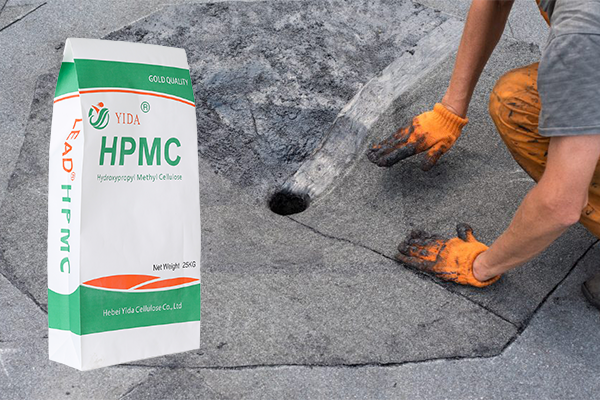
Hydroxypropyl Methyl Cellulose (HPMC) is a water-soluble cellulose ether derived from natural wood pulp or cotton through chemical modification. Its molecular structure—featuring methyl and hydroxypropyl groups—grants it unique properties:
Water retention: Slows moisture evaporation during curing.
Thickening: Adjusts viscosity for controlled flow.
Film-forming: Creates cohesive layers that resist cracking.
In flat drainage systems, HPMC enhances the performance of cementitious or polymer-based coatings by improving workability, adhesion, and durability.
When added to drainage mortars or slurries, HPMC:
Stabilizes mixtures: Prevents sedimentation of aggregates.
Controls flow: Ensures even distribution across flat surfaces.
Reduces permeability: Forms dense, water-resistant layers.
Mitigates cracking: Flexibilizes rigid cement matrices.
Flat drainage layers often face uneven drying due to wind or sunlight. HPMC retains moisture, ensuring complete hydration of cement particles. This minimizes shrinkage and enhances the structural integrity of drainage beds.
HPMC transforms brittle cement mixes into smooth, flowable slurries. This is critical for:
Self-leveling drainage floors: Reduces manual troweling.
Pumped applications: Prevents blockages in narrow pipes.
Traditional cementitious drainage layers are prone to cracking under thermal stress or substrate movement. HPMC introduces flexibility, allowing the material to expand/contract without failure. This extends the lifespan of flat drainage systems by decades.
HPMC is non-toxic, biodegradable, and free from volatile organic compounds (VOCs). It aligns with green building standards like LEED and BREEAM, making it ideal for sustainable drainage projects.
HPMC is widely used in polymer-modified cement (PMC) mortars for flat roof drainage. By thickening the mix and retaining water, it ensures:
Uniform hydration: Prevents weak spots.
Improved adhesion: Bonds tightly to concrete or metal substrates.
Resistance to ponding water: Reduces leakage risks.
Typical formulations:
Cement + HPMC + silica sand: For high-strength drainage beds.
Cement + HPMC + acrylic polymers: For flexible, crack-resistant layers.
In single-component liquid membranes, HPMC acts as a rheology modifier, preventing pigment settling and ensuring even spray or roller application. This is vital for:
Sloped drainage channels: Maintains consistent thickness.
Complex geometries: Adapts to curves without sagging.
For permeable concrete or asphalt overlays, HPMC improves the workability of void-forming aggregates. It ensures proper pore distribution, enhancing water infiltration while maintaining structural strength.
Not all HPMC products are suitable for drainage. Key parameters include:
Viscosity grade: Higher viscosity (e.g., 100,000 mPa·s) suits thick drainage mortars, while lower grades (e.g., 10,000 mPa·s) work for self-leveling slurries.
Methoxy/hydroxypropyl ratio: A balanced ratio (e.g., 1.8–2.2 methoxy, 0.2–0.3 hydroxypropyl) optimizes water retention and gel strength.
Particle size: Fine powders (≤100 µm) dissolve rapidly, reducing mixing time.
Combine cement, aggregates (e.g., silica sand), and HPMC in a dry mixer.
Blend for 2–3 minutes to ensure uniform dispersion.
Slowly pour water (or polymer emulsion) into the mixer while stirring.
Avoid over-mixing to prevent air entrapment.
Timing: Apply within 30 minutes of mixing to leverage HPMC’s workability.
Thickness: Maintain a minimum layer of 15 mm for reliable drainage.
Slope: Ensure a 1–2% gradient for efficient water runoff.
Solution: Use low-viscosity HPMC (e.g., 5,000 mPa·s) and add defoamers to reduce air bubbles.
Solution: Increase HPMC dosage to 0.4–0.6% by weight of cement to improve cohesion.
Solution: Combine HPMC with calcium chloride accelerators or switch to cold-weather-grade HPMC.
The push for climate-resilient infrastructure is driving innovation in HPMC-based drainage materials. Emerging trends include:
Bio-based HPMC: Derived from agricultural waste to reduce carbon footprint.
Smart drainage systems: HPMC combined with sensors for real-time moisture monitoring.
Photocatalytic coatings: HPMC-enhanced mortars with self-cleaning properties.
From improving workability to extending service life, HPMC for flat drainage is transforming how engineers approach water management. By selecting the right grade and optimizing mix designs, professionals can create drainage systems that withstand extreme weather, reduce maintenance costs, and comply with sustainability goals.
For contractors seeking reliability, efficiency, and eco-friendliness, HPMC is not just an additive—it’s the foundation of modern flat drainage solutions.
Copyright:@2020-2021

Comments Please sign in or sign up to post.
0
0 of 500 characters used