
A mechanical tee is a type of mechanical type pipe fitting designed to create a branch from a main pipe without welding. It is commonly used in applications where the integrity of the pipeline needs to be preserved, such as in pressurized systems or underground pipelines.
No Welding Required: Unlike traditional tees, mechanical tees do not require welding, making them easier and faster to install.
Pressure-Tight Seals: Mechanical tees are designed to provide a tight seal that can withstand high pressure, preventing leaks in critical systems.
Variety of Sizes: These fittings are available in multiple sizes to accommodate various pipe diameters.
Gas and Water Systems: Mechanical tees are commonly used in gas or water systems for creating branches while maintaining pipeline pressure.
Industrial Pipelines: In industrial settings, mechanical tees are used for systems requiring frequent maintenance or changes.
Emergency Repairs: They are often used for emergency repairs due to their easy installation and reliable sealing properties.
A pipe saddle is a type of fitting used to support or secure a pipe to a surface or another pipe. Unlike a mechanical tee, which creates a branch, a pipe saddle is primarily used for stability, preventing pipe movement or damage from external forces.
Support Functionality: A pipe saddle helps support the weight and reduce stress on a pipe by providing a stable base.
Corrosion-Resistant: Pipe saddles are typically made from corrosion-resistant materials like stainless steel to withstand harsh environments.
Easy Installation: These fittings are also easy to install and typically require only bolts or screws to secure them.
Pipe Support: They are commonly used to support pipes in overhead systems or along walls.
Reducing Vibration: Pipe saddles can help reduce vibrations caused by flowing liquids or gases, preventing pipe fatigue.
Corrosion Prevention: In some cases, pipe saddles are used to provide an extra layer of protection against corrosion by keeping the pipe off the surface.
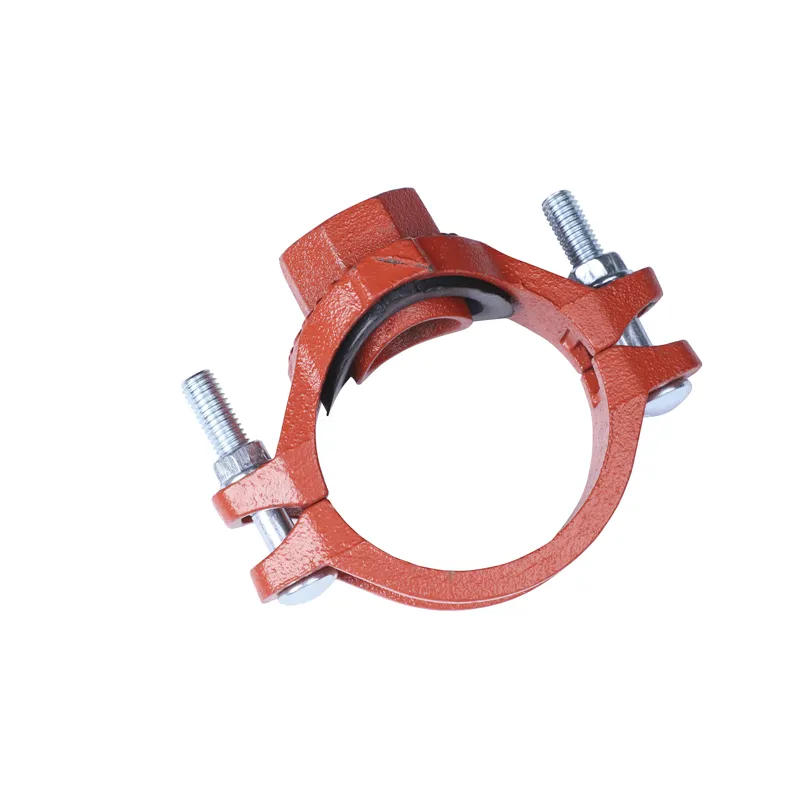
The primary difference between mechanical tees and pipe saddles lies in their function. A mechanical type pipe fitting like a mechanical tee creates a branch from the main pipeline, allowing flow to move in a different direction. In contrast, a pipe saddle serves to support and stabilize a pipe, preventing it from moving or being damaged by external forces.
Mechanical Tee: Used to create branches in the pipeline.
Pipe Saddle: Used to provide support and reduce stress or vibration on the pipe.
Mechanical Tee: Features a fitting that attaches to the main pipe and has a side outlet for creating the branch. It is typically clamped or bolted in place to ensure a secure connection.
Pipe Saddle: Composed of a curved fitting that wraps around the pipe, offering support and preventing movement. It is usually fixed to a surface or pipe with bolts or brackets.
Mechanical Tee: Installation typically involves bolting or clamping the tee to the pipe. It does not require welding, which makes it a popular choice for applications that need quick repairs or modifications.
Pipe Saddle: This fitting is usually installed using bolts or screws to secure the pipe in place. Saddles are often part of larger support systems designed to keep the pipeline stable.
Mechanical Tee: Primarily used in systems that need to create branches for flow diversion, such as water supply networks, gas pipelines, and emergency repair systems.
Pipe Saddle: Commonly used in applications where stability is required, such as supporting pipes in elevated positions, reducing vibrations, and ensuring pipes remain intact over time.
Mechanical Tee: Mechanical tees are designed to handle high pressure without leaking, making them suitable for critical systems where maintaining pressure is essential.
Pipe Saddle: While pipe saddles support the pipe structure, they are not generally used to manage or seal pressure. Their function is more about maintaining the stability of the pipe.
When deciding between a mechanical tee and a pipe saddle, the primary consideration is the application.
Choose a Mechanical Tee when you need to create a branch in a pipeline without welding. It is ideal for high-pressure systems where a reliable seal is required.
Choose a Pipe Saddle when you need to provide support for a pipe, particularly in systems where the pipe is subject to external forces, vibrations, or corrosive environments.
In conclusion, both mechanical tees and pipe saddles play essential roles in piping systems, but they serve very different purposes. Mechanical tees are used for branching pipelines, whereas pipe saddles provide support and stability. Understanding their differences and appropriate applications can help you choose the right fitting for your project, ensuring the longevity and performance of your piping system.
Copyright:@2020-2021

Comments Please sign in or sign up to post.
0
0 of 500 characters used