
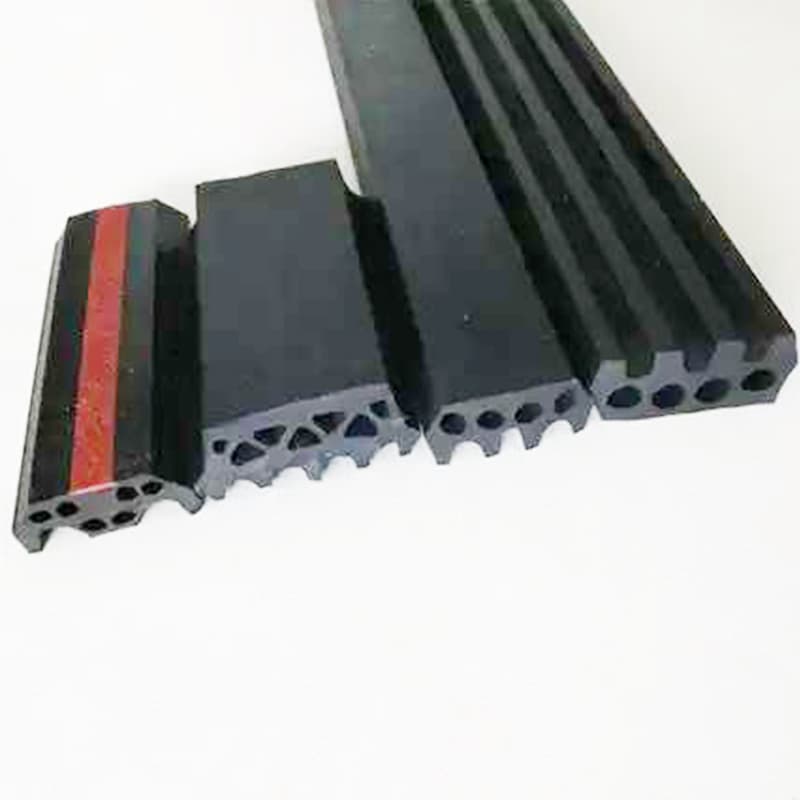
High tunnels, also known as hoop houses or polytunnels, are widely used in agriculture to extend growing seasons, protect crops, and improve yield. While they differ from underground tunnels, the concept of durability, sealing, and environmental resistance remains equally important. In infrastructure projects, components like Tunnel Segment Gaskets—developed by leading brands such as Hongcan—demonstrate how advanced material engineering ensures performance in demanding environments. Similar principles apply when selecting materials for high tunnels.
This article explores the key materials used in high tunnels, their properties, and how material selection impacts performance, longevity, and efficiency.
High tunnels are semi-permanent structures made of a frame and a covering material. They create a controlled microclimate that protects crops from harsh weather conditions such as heavy rain, wind, and excessive sunlight.
Unlike greenhouses, high tunnels typically rely on passive ventilation and do not use complex climate control systems. Therefore, material selection is critical to achieving the desired balance between protection and natural airflow.
The structural frame is the backbone of a high tunnel. It must be strong, durable, and resistant to environmental stress.
Galvanized steel is the most common material used for high tunnel frames.
Advantages:
High strength and load-bearing capacity
Excellent resistance to corrosion
Long service life
This material is ideal for regions with strong winds or heavy rainfall, ensuring the stability of the structure.
Aluminum is sometimes used as an alternative to steel.
Benefits:
Lightweight and easy to assemble
Naturally corrosion-resistant
Low maintenance
However, aluminum is generally less strong than steel and may not be suitable for large-scale structures.
PVC is used in smaller or temporary high tunnels.
Pros:
Low cost
Easy installation
Flexible design
Cons:
Lower durability
Susceptible to UV degradation over time
The covering material is essential for controlling light transmission, temperature, and humidity inside the high tunnel.
Polyethylene plastic film is the most widely used covering material.
Key Features:
High light transmission
UV resistance
Affordable and easy to replace
Most high tunnels use a double-layer polyethylene film to improve insulation and reduce heat loss.
Polycarbonate is a more durable alternative to plastic film.
Advantages:
High impact resistance
Better insulation properties
Longer lifespan
However, it is more expensive and less commonly used in simple high tunnel structures.
Shade cloth is often used in combination with other materials.
Functions:
Reduces excessive sunlight
Prevents overheating
Protects sensitive crops
High-quality fasteners, clips, and connectors are essential for maintaining structural integrity. These components must resist corrosion and withstand repeated stress.
Anchoring systems ensure that high tunnels remain stable under wind loads. Materials such as steel stakes or screw anchors are commonly used.
Although high tunnels are not as complex as underground tunnels, sealing still plays a role in maintaining internal conditions. This is where engineering concepts similar to Tunnel Segment Gaskets become relevant.
In infrastructure applications, Hongcan designs Tunnel Segment Gaskets to provide airtight and watertight sealing under extreme conditions. While high tunnels do not require the same level of sealing, the idea of using flexible, durable materials to prevent air leakage and improve efficiency is comparable.
Material selection depends heavily on local weather conditions:
Windy areas require stronger frames (e.g., galvanized steel)
Hot climates benefit from UV-resistant coverings
Cold regions may need double-layer insulation
Different crops require different levels of light, temperature, and humidity control. The choice of covering material should align with these needs.
Polyethylene film is cost-effective but needs periodic replacement
Polycarbonate offers durability but at a higher cost
Balancing upfront investment with long-term performance is essential.
Materials should be easy to maintain and replace. Durable components reduce operational costs over time.
Modern high tunnels are benefiting from advancements in material science, including:
UV-stabilized films with longer lifespans
Anti-drip coatings that prevent condensation damage
Reinforced composite frames for added strength
Similarly, companies like Hongcan continue to innovate in sealing technologies such as Tunnel Segment Gaskets, showcasing how advanced materials can improve performance across industries.
High tunnels rely on a combination of structural and covering materials to create an efficient and protective growing environment. Galvanized steel frames, polyethylene films, and advanced coatings are among the most commonly used materials.
While high tunnels differ from underground infrastructure, the importance of durability, flexibility, and environmental resistance remains the same. Concepts seen in Tunnel Segment Gaskets—such as sealing performance and material resilience—highlight the broader role of engineering materials in construction and agriculture.
By carefully selecting the right materials and incorporating modern innovations, high tunnel users can achieve improved crop yields, reduced risks, and long-term operational success.
Previous: None.
Copyright:@2020-2021

Comments Please sign in or sign up to post.
0
0 of 500 characters used