
In industrial compressed air systems, oil contamination is a common challenge. Oil mist in compressed air can damage equipment, reduce efficiency, and contaminate products in sensitive industries such as food processing, pharmaceuticals, electronics, and manufacturing. To address this problem, an oil mist separator filter element is often used alongside an air compressor intake filter to maintain high-quality, clean air.
Understanding how an oil mist separator filter element works is essential for optimizing air compressor performance, extending equipment life, and improving operational efficiency. ZHUAN LV specializes in producing high-quality filtration solutions, including air compressor intake filters and oil mist separator filter elements, designed for demanding industrial applications.
An oil mist separator filter element is a filtration component specifically designed to remove fine oil aerosols and mist from compressed air streams. Unlike standard particulate filters, which capture solid particles, oil mist separators are engineered to handle liquid contamination suspended as microscopic droplets.
The primary functions of an oil mist separator filter element include:
· Capturing airborne oil droplets from compressed air
· Preventing downstream equipment contamination
· Improving product quality in sensitive manufacturing processes
· Extending the lifespan of pneumatic tools and compressors
When paired with an air compressor intake filter, the system ensures that both airborne particulates and oil aerosols are effectively removed before the air enters critical equipment.
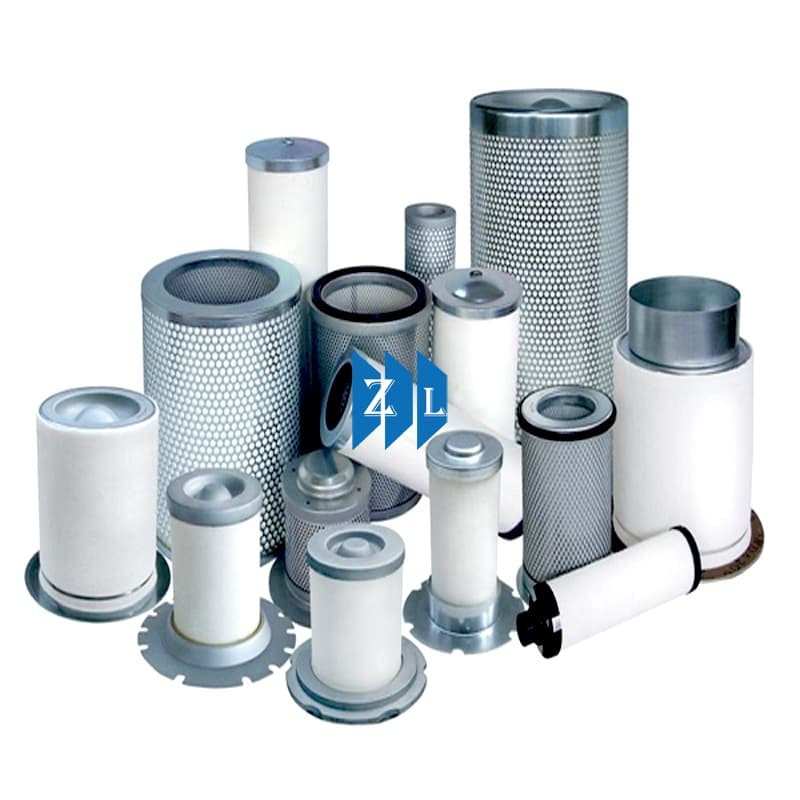
Oil mist separator filter elements primarily operate through a coalescing process. The filter media is made of fine fibers that force tiny oil droplets to collide and combine into larger droplets.
Process steps include:
1. Initial capture: Small oil droplets in the air stream are trapped by the filter media.
2. Coalescence: The trapped droplets merge into larger drops as they accumulate within the filter layers.
3. Drainage: The larger droplets are heavy enough to fall into a collection area, where they are removed from the air stream.
This coalescing mechanism ensures that even sub-micron oil particles are efficiently separated from compressed air.
Many oil mist separator elements use hydrophobic or oleophobic filter media, which repel water and oil. This helps droplets coalesce more effectively and prevents them from re-entering the airflow.
Benefits of this design include:
· High oil removal efficiency
· Reduced filter clogging
· Longer service life
· Consistent compressed air quality
After the oil droplets combine and grow in size, they are directed to the bottom of the filter housing through gravity. Some systems include an automatic or manual drain to remove the collected oil safely.
This design ensures minimal oil carryover into downstream equipment.
While the oil mist separator focuses on liquid contaminants, the air compressor intake filter removes solid particulates such as dust, dirt, and airborne debris before the air enters the compressor.
Key benefits include:
· Protecting internal compressor components from wear
· Maintaining airflow efficiency
· Reducing energy consumption
· Enhancing the overall performance of the oil mist separation system
Together, the air compressor intake filter and oil mist separator provide a two-stage filtration system that addresses both solid and liquid contaminants.
Oil mist separator filter elements are used in a wide range of industries, including:
· Manufacturing: To protect pneumatic tools and automated machinery from oil contamination.
· Food and beverage: Ensuring compressed air meets hygiene standards.
· Pharmaceuticals: Maintaining contamination-free air in production environments.
· Electronics: Protecting sensitive equipment from oil deposits.
· Aviation and automotive: Removing oil aerosols from fuel or air lines.
In all these applications, clean compressed air improves equipment reliability, reduces maintenance, and enhances product quality.
Even high-quality filter elements require routine maintenance. Common signs that replacement or servicing is needed include:
· Increased oil carryover in compressed air
· Higher pressure drop across the filter
· Visible oil accumulation in the collection chamber
· Reduced airflow or efficiency
Following a regular maintenance schedule ensures optimal performance and prevents system contamination.
Investing in a premium oil mist separator filter element, such as those from ZHUAN LV, offers several advantages:
· Efficient removal of fine oil aerosols
· Prolonged service life
· Improved compressed air purity
· Reduced equipment wear and downtime
· Compatibility with standard air compressor intake filters
High-performance filter elements are crucial for industrial systems that require reliable, clean compressed air for precision operations.
An oil mist separator filter element works by coalescing fine oil droplets into larger ones, which are then safely drained from the compressed air system. When paired with an air compressor intake filter, it provides a comprehensive solution for removing both liquid and solid contaminants.
Using a properly maintained oil mist separator filter element enhances equipment lifespan, improves air quality, and ensures reliable operation in industries that depend on clean compressed air. ZHUAN LV offers advanced filtration solutions designed for high efficiency, long service life, and consistent performance in demanding industrial applications.
Previous: Common Sizing and Compatibility Mistakes When Specifying Pipe Fittings for Industrial Pipelines
Copyright:@2020-2021

Comments Please sign in or sign up to post.
0
0 of 500 characters used