
Plate heat exchangers are widely used in HVAC systems, chemical processing, food and beverage production, and power generation due to their high thermal efficiency and compact design. A critical component that ensures their reliable performance is the Plate Heat Exchanger Gaskets. These gaskets play a vital role in sealing, flow control, and system safety.
As a professional sealing solutions provider, Hongcan designs and manufactures high-performance gasket solutions for industrial heat exchangers. Understanding the role of gaskets helps engineers improve system efficiency, reduce downtime, and extend equipment lifespan.
Plate Heat Exchanger Gaskets are flexible sealing components installed on heat exchanger plates. They are responsible for sealing the channels between plates so that different fluids can transfer heat without mixing.
These gaskets are designed to:
· Prevent leakage between fluid channels
· Maintain pressure integrity
· Separate hot and cold media
· Direct fluid flow correctly inside the exchanger
Without properly functioning gaskets, the heat exchanger cannot operate efficiently or safely.
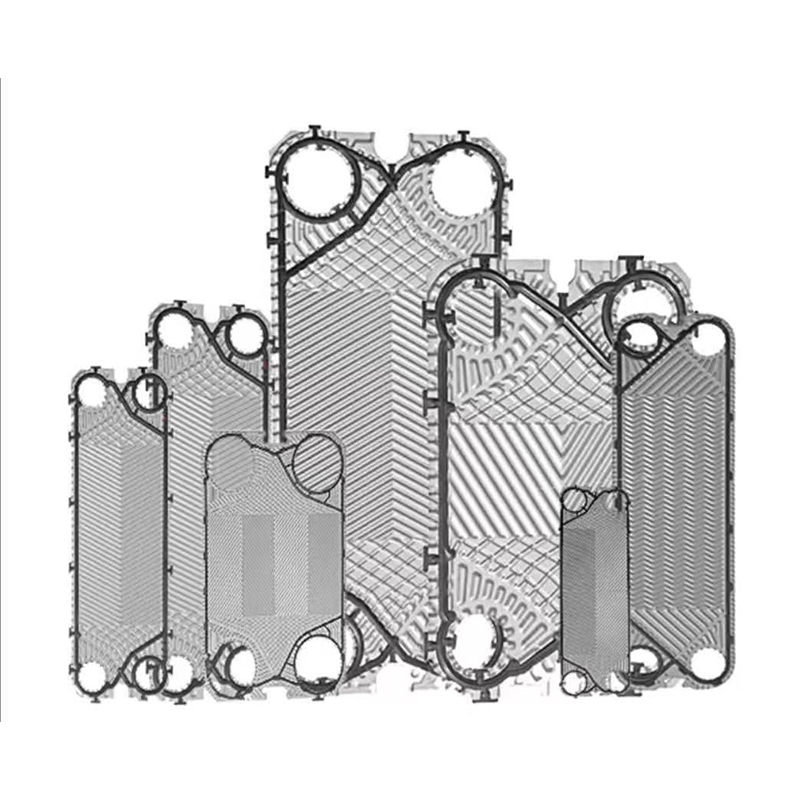
The gasket is not just a sealing component; it is a key functional element that determines how the entire heat exchanger operates.
The most important role of Plate Heat Exchanger Gaskets is to prevent leakage between plates and to the external environment.
Gaskets are compressed between heat exchanger plates, creating a tight seal that blocks fluid escape paths.
· Prevents loss of process fluids
· Avoids contamination between media
· Ensures safe system operation
Even small leaks can significantly reduce system efficiency and safety.
Heat exchangers work by transferring heat between two different fluids without allowing them to mix. Gaskets ensure this separation is maintained.
Each gasket is designed to guide fluids through specific channels while blocking unwanted flow paths.
· Prevents cross-contamination
· Maintains product purity
· Ensures correct heat transfer efficiency
In industries like food processing and pharmaceuticals, this function is extremely critical.
Another key role of Plate Heat Exchanger Gaskets is to control how fluids move through the plate channels.
Gaskets are strategically positioned to create alternating flow paths between plates, allowing efficient heat exchange.
· Maximizes heat transfer surface area
· Improves energy efficiency
· Ensures stable system performance
Without proper flow control, heat exchange efficiency would drop significantly.
Gaskets help maintain internal pressure within the heat exchanger system.
When plates are tightened together, the gasket compresses and forms a pressure-resistant barrier.
· Prevents pressure loss
· Supports high-pressure operation
· Enhances system stability
Proper gasket compression is essential for safe and efficient operation.
By ensuring proper sealing and correct flow paths, gaskets directly contribute to heat transfer performance.
· Prevents mixing of fluids
· Maintains optimal flow turbulence
· Ensures maximum heat transfer surface contact
Efficient gasket performance leads to better energy utilization and lower operating costs.
Faulty or low-quality gaskets can lead to leakage, corrosion, or contamination, which may damage the heat exchanger plates.
· Prevents chemical leakage
· Reduces corrosion risk
· Extends plate lifespan
High-quality Plate Heat Exchanger Gaskets help protect expensive equipment from premature failure.
Different operating conditions require different gasket materials.
Suitable for water, steam, and HVAC applications due to excellent heat resistance.
Ideal for oil-based fluids and refrigeration systems.
Used in high-temperature and chemically aggressive environments.
Best for extreme chemical resistance and high-purity applications.
Material selection is essential for ensuring long-term gasket performance.
Gaskets are typically designed in different configurations depending on system requirements.
Used for high-pressure systems with focused sealing areas.
Used for low to medium pressure systems with full surface coverage.
Both configurations are widely used in industrial heat exchanger systems.
Even high-quality gaskets can fail if not properly maintained.
Excessive tightening can permanently deform the gasket.
Incorrect material selection may cause swelling or degradation.
Extreme temperatures can reduce elasticity and sealing performance.
Over time, elastomers naturally lose flexibility and sealing ability.
Regular inspection helps prevent unexpected failures.
Hongcan provides advanced sealing technology for industrial heat exchangers. With strong engineering expertise and material knowledge, Hongcan ensures that Plate Heat Exchanger Gaskets meet strict performance requirements for durability, chemical resistance, and thermal stability.
Proper gasket design and selection help industries improve safety, efficiency, and equipment reliability.
The gasket plays a crucial role in plate heat exchangers by preventing leakage, separating fluids, controlling flow paths, maintaining pressure, and improving thermal efficiency. Without reliable Plate Heat Exchanger Gaskets, the entire system would lose efficiency and safety.
Choosing the right gasket material and design is essential for long-term performance. With advanced manufacturing capabilities and industry experience, Hongcan delivers reliable sealing solutions for a wide range of industrial applications worldwide.
Previous: Budget vs Long-Term ROI: How to Justify the Investment in Industrial Ice Manufacturing Equipment
Next: Stainless Steel Ball Valves Enhance Safety and Efficiency at Chemical Plant
Copyright:@2020-2021

Comments Please sign in or sign up to post.
0
0 of 500 characters used