
Polyvinyl chloride (PVC) is one of the world's most versatile thermoplastics, used in industries ranging from construction and healthcare to automotive and packaging. Depending on the manufacturing process, PVC is primarily available as suspension resin or emulsion resin. While both materials have their place in the market, PVC suspension resin remains the preferred choice for the majority of industrial applications due to its balanced performance, processing efficiency, and cost-effectiveness.
For buyers sourcing raw materials, understanding the differences between these two resin types can help ensure the right material is selected for each application. Leading Pvc Suspension Resin Manufacturers, such as Dingnuo, produce high-quality suspension resin that delivers reliable performance across a wide range of PVC products.
Although both materials are made from vinyl chloride monomer (VCM), they are produced using different polymerization methods.
PVC suspension resin is manufactured through suspension polymerization, where VCM droplets are dispersed in water with the help of suspension agents. As polymerization occurs, the droplets form solid resin particles with a relatively large and uniform size.
This production method results in resin that offers excellent flowability, high purity, and outstanding processing performance.
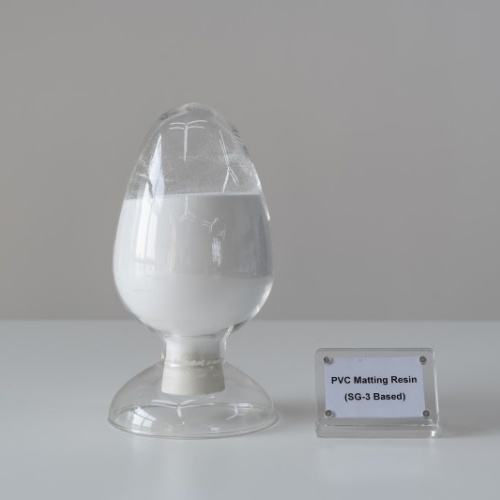
PVC emulsion resin is produced through emulsion polymerization. In this process, surfactants create microscopic VCM droplets that form much finer resin particles.
The resulting resin has a very small particle size and is mainly used in specialty applications such as:
· PVC paste resin
· Artificial leather
· Decorative coatings
· Printing inks
· Adhesives
· Gloves
While emulsion resin excels in these niche applications, suspension resin dominates general-purpose PVC manufacturing.
One of the biggest advantages of suspension resin is its outstanding processing characteristics.
The larger particle size allows the resin to mix evenly with stabilizers, lubricants, fillers, and pigments. It also flows smoothly through extrusion and injection molding equipment.
Benefits include:
· Stable extrusion
· Faster production speeds
· Reduced machine wear
· Consistent product quality
This makes suspension resin ideal for high-volume manufacturing.
Cost is a major consideration for manufacturers.
Compared with emulsion polymerization, suspension polymerization generally requires:
· Fewer processing additives
· Lower energy consumption
· Simpler purification
· Easier drying
· More efficient production
As a result, PVC suspension resin is typically more economical for large-scale industrial applications.
Reliable Pvc Suspension Resin Manufacturers optimize their production processes to further improve efficiency and maintain competitive pricing.
Suspension polymerization uses fewer emulsifiers and surfactants than emulsion polymerization.
This results in resin with:
· Lower impurity levels
· Reduced residual additives
· Better thermal stability
· Improved product appearance
High purity is especially important for products requiring consistent mechanical performance and long service life.
Particle morphology plays a significant role in processing efficiency.
PVC suspension resin features free-flowing particles that move easily through storage silos, feeding systems, mixers, and processing equipment.
Improved flowability provides several advantages:
· Easier handling
· Better automatic feeding
· Uniform blending
· Reduced material bridging
These characteristics contribute to smoother production operations.
Suspension resin typically produces PVC products with excellent:
· Tensile strength
· Impact resistance
· Rigidity
· Dimensional stability
These properties are essential for demanding applications such as pressure pipes, window profiles, and industrial fittings.
Products manufactured with suspension resin generally demonstrate:
· Long service life
· Weather resistance
· Chemical resistance
· Corrosion resistance
This makes suspension PVC particularly suitable for outdoor construction materials.
Another reason suspension resin dominates the PVC market is its versatility.
PVC suspension resin is widely used to manufacture:
· Water supply pipes
· Drainage pipes
· Window profiles
· Wall panels
· Roofing membranes
Its strength and durability make it an ideal material for long-term infrastructure projects.
Electrical manufacturers use suspension resin for:
· Cable insulation
· Wire sheathing
· Electrical conduits
· Junction boxes
Its excellent electrical insulation properties ensure safe and reliable performance.
Suspension resin is commonly processed into:
· Transparent sheets
· Rigid films
· Blister packaging
· Containers
Its balanced mechanical properties and ease of processing support efficient packaging production.
Many everyday products rely on suspension resin, including:
· Flooring
· Furniture components
· Household goods
· Toys
· Storage containers
Its versatility allows manufacturers to produce products with consistent quality at competitive costs.
Modern suspension polymerization technology has become increasingly sustainable.
Advanced manufacturing facilities recover and recycle unreacted vinyl chloride monomer (VCM), reducing emissions and improving resource efficiency.
Leading Pvc Suspension Resin Manufacturers also employ:
Automated systems optimize heating and cooling cycles, reducing energy consumption during production.
Vacuum stripping technology minimizes residual monomer in the finished resin, helping manufacturers comply with international safety and environmental regulations.
Automated monitoring ensures stable production conditions while minimizing waste and reducing off-specification batches.
These improvements make suspension resin a more environmentally responsible option for large-scale manufacturing.
Although suspension resin is preferred for most applications, emulsion resin remains essential for products requiring ultra-fine particles and paste processing.
Typical uses include:
· Artificial leather coatings
· PVC gloves
· Textile coatings
· Decorative wallpaper
· Specialty adhesives
· Sealants
These applications benefit from the smooth surface finish and excellent film-forming properties of emulsion resin.
Rather than replacing suspension resin, emulsion resin complements it by serving specialized markets.
Selecting the right supplier is just as important as choosing the right resin type.
Experienced Pvc Suspension Resin Manufacturers provide:
· Stable product quality
· Consistent particle size distribution
· Low impurity levels
· Reliable supply capacity
· Comprehensive quality testing
· Technical support for customers
A dependable manufacturer helps improve production efficiency while reducing operational risks.
As one of the trusted Pvc Suspension Resin Manufacturers, Dingnuo is committed to delivering premium PVC suspension resin for customers worldwide. By combining advanced suspension polymerization technology with strict quality management, Dingnuo produces resin with high purity, uniform particle size, excellent processing performance, and low residual VCM.
Whether your application involves PVC pipes, profiles, cables, films, flooring, or industrial components, Dingnuo provides reliable materials that support efficient manufacturing, consistent product quality, and long-term performance. With a strong focus on innovation, quality assurance, and customer satisfaction, Dingnuo is a dependable partner for businesses seeking high-performance PVC suspension resin.
Previous: Lactic Acid Price Trend Q2 2026 | Forecast, Chart, Prices & Index
Next: When to Use PU Foam Adhesive for Composite Panel Assembly
Copyright:@2020-2021

Comments Please sign in or sign up to post.
0
0 of 500 characters used