
The durability of aggregates plays a critical role in the performance of roads, highways, railways, airports, and concrete structures. Weak or abrasion-prone aggregates can lead to premature pavement deterioration, increased maintenance costs, and reduced structural lifespan. To evaluate aggregate resistance to wear, engineers rely on the Micro-Deval test, one of the most recognized laboratory methods worldwide.
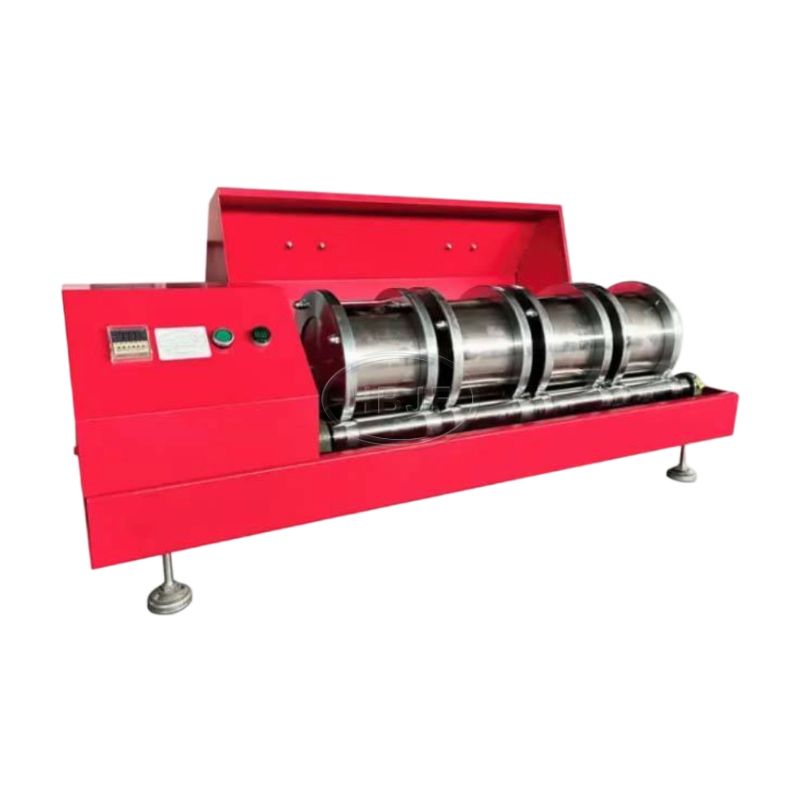
Using professional Aggregate Testing Equipment, laboratories can accurately measure aggregate durability under wet abrasion conditions. Choosing the right testing machine is equally important, as equipment quality directly affects testing accuracy and compliance with international standards. In this article, we'll explain how the Micro-Deval test works, why it matters, and which machine specifications should be prioritized when selecting equipment from trusted manufacturers like HBJF.
The Micro-Deval test is a standardized laboratory procedure used to determine the abrasion resistance of coarse aggregates in the presence of water.
Unlike dry abrasion tests, the Micro-Deval method simulates real service conditions where aggregates are exposed to moisture, traffic loading, and continuous friction. The test measures the percentage of material lost after controlled abrasion, helping engineers evaluate aggregate durability before construction begins.
The test is widely specified in international standards such as:
ASTM D6928 outlines procedures for evaluating coarse aggregate resistance to degradation using the Micro-Deval apparatus.
Many transportation agencies adopt AASHTO procedures for highway material evaluation.
European laboratories commonly perform the test according to EN 1097 requirements for aggregate mechanical properties.
Because of its repeatability and realistic testing conditions, the Micro-Deval method has become an essential part of modern Aggregate Testing Equipment laboratories.
Aggregate durability directly influences pavement performance and maintenance costs.
The Micro-Deval test helps engineers:
Different rock types exhibit varying resistance to abrasion. Testing allows engineers to compare materials objectively before construction.
Durable aggregates reduce surface wear, rutting, and particle breakdown under heavy traffic.
Many infrastructure projects require aggregate suppliers to meet maximum Micro-Deval loss values before materials are approved.
Selecting aggregates with superior abrasion resistance extends pavement life and lowers repair frequency.
The testing procedure is relatively straightforward but requires precise control to ensure reliable results.
A specified mass of clean, graded coarse aggregate is prepared according to the applicable testing standard.
A predetermined number of hardened steel balls are placed inside the rotating drum along with the aggregate sample.
Water is added to create a wet abrasion environment that better simulates field conditions.
The drum rotates at a controlled speed for a specified number of revolutions.
During rotation, the aggregate particles continuously collide with:
· Steel balls
· Other aggregate particles
· The drum wall
This produces gradual wear similar to long-term service conditions.
After testing, the aggregate is washed, dried, and sieved.
The percentage of material passing the specified sieve is calculated as the Micro-Deval loss.
Lower loss percentages indicate higher aggregate durability.
Modern Aggregate Testing Equipment supports quality control across numerous industries.
Road authorities evaluate aggregates before pavement construction to ensure long-lasting road surfaces.
Durable aggregates are essential for resisting heavy aircraft loading and surface abrasion.
The test helps determine whether ballast materials can withstand continuous train traffic.
High-performance concrete benefits from aggregates with excellent abrasion resistance.
Aggregate producers routinely test materials to maintain product consistency and comply with customer specifications.
Not all Micro-Deval machines deliver the same level of performance. When selecting professional Aggregate Testing Equipment, several technical specifications should be carefully evaluated.
The drum must rotate at the speed specified by relevant testing standards.
A stable and accurate motor ensures repeatable testing results.
Variable speed or poorly controlled rotation may introduce significant measurement errors.
The drum diameter and internal dimensions must fully comply with ASTM, EN, or AASHTO specifications.
Incorrect drum size can affect abrasion intensity and invalidate test results.
A corrosion-resistant stainless steel drum provides:
· Long service life
· Easy cleaning
· Stable testing conditions
· Resistance to moisture exposure
This is especially important because Micro-Deval testing is performed under wet conditions.
A reliable motor and transmission system ensure smooth operation during thousands of testing cycles.
Industrial-grade drive components minimize maintenance and improve laboratory productivity.
Modern Aggregate Testing Equipment often includes intelligent digital controls featuring:
· Automatic timing
· Rotation counting
· Speed monitoring
· LCD touch displays
· Error alarms
Automation reduces operator workload while improving consistency.
Professional laboratories should prioritize equipment equipped with:
· Emergency stop buttons
· Protective safety covers
· Automatic shutdown systems
· Overload protection
These features protect both operators and laboratory equipment.
Precision bearings and balanced drum construction reduce vibration and operating noise while improving measurement accuracy.
Machines designed with accessible components simplify routine inspection, cleaning, and servicing, reducing downtime.
Selecting the appropriate Micro-Deval testing machine involves more than comparing prices.
Consider the following factors:
Ensure the equipment fully complies with the testing standards required by your laboratory or project.
Consistent results are essential for reliable quality control.
Choose equipment with proven calibration performance and precision engineering.
High-volume laboratories benefit from automated systems that improve efficiency and reduce manual intervention.
Reliable after-sales service, spare parts availability, and technical support are critical for long-term equipment operation.
HBJF specializes in manufacturing advanced Aggregate Testing Equipment for construction laboratories, universities, research institutes, and quality control agencies.
HBJF Micro-Deval machines are manufactured with strict quality standards to ensure accurate, repeatable test results.
The equipment is designed to meet internationally recognized testing standards, providing confidence in laboratory data.
Heavy-duty frames, high-quality stainless steel drums, and industrial motors ensure reliable long-term performance.
HBJF systems feature user-friendly digital interfaces that simplify operation while improving testing efficiency.
In addition to Micro-Deval machines, HBJF offers a complete range of Aggregate Testing Equipment, including:
· Los Angeles Abrasion Testing Machines
· Aggregate Crushing Value Test Equipment
· Flakiness and Elongation Gauges
· Sieve Shakers
· Density and Water Absorption Testing Equipment
This allows laboratories to perform comprehensive aggregate quality evaluations using equipment from a single trusted supplier.
To obtain reliable and repeatable results:
· Use properly graded aggregate samples.
· Verify machine calibration regularly.
· Inspect steel balls for wear and replace them when necessary.
· Maintain the correct water volume specified by the standard.
· Clean the drum thoroughly after each test.
· Record all testing parameters consistently.
Following these practices ensures dependable results and extends the service life of your testing equipment.
The Micro-Deval test is one of the most effective methods for evaluating aggregate abrasion resistance under realistic wet conditions. It helps engineers select durable materials for roads, bridges, railways, airports, and concrete structures, ultimately improving infrastructure performance and reducing maintenance costs.
Equally important is choosing high-quality Aggregate Testing Equipment that delivers precise, repeatable, and standards-compliant results. From accurate rotation control and durable stainless steel drums to intelligent digital systems and dependable safety features, every machine specification contributes to testing reliability. With its commitment to innovation, quality, and international compliance, HBJF provides professional Micro-Deval testing solutions that help laboratories achieve accurate aggregate durability assessments with confidence.
Previous: How Does the LA Abrasion Test Differ from Micro-Deval for Aggregate QC?
Next: How to Detect Rebar Cover Depth with a Steel Bar Testing Instrument?
Copyright:@2020-2021

Comments Please sign in or sign up to post.
0
0 of 500 characters used