
Storage tanks are fundamental to virtually every industrial process—storing raw materials, intermediates, finished products, and waste streams. In environments where stored liquids are corrosive, toxic, or temperature-sensitive, the selection of tank material is a critical engineering decision with far-reaching implications for safety, maintenance cost, and regulatory compliance. Fiberglass reinforced plastic (FRP) tanks have established themselves as the preferred solution across a wide range of demanding storage applications.
The primary advantage of FRP tanks is their intrinsic resistance to corrosion. Chemical storage facilities handling sulfuric acid, hydrochloric acid, sodium hydroxide, and other aggressive media have long relied on FRP tanks because the thermosetting resin matrix is chemically inert to these substances. Unlike carbon steel tanks, which require internal linings that can blister, crack, or delaminate over time, FRP tanks provide homogeneous corrosion resistance throughout the wall thickness. This eliminates the risk of hidden underfilm corrosion—a frequent cause of premature steel tank failure.
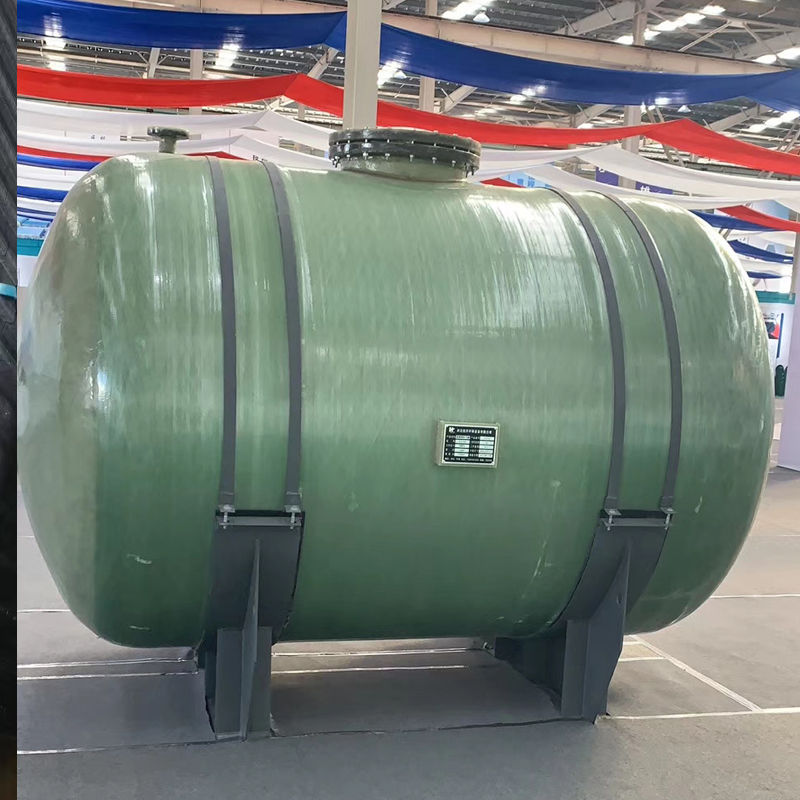
Manufacturing capabilities now span a remarkably wide range of sizes and configurations. Filament winding production lines can produce tanks with diameters from 800 mm to 5000 mm and beyond, while hand lay-up and spray-up techniques enable the fabrication of custom shapes, nozzles, manways, and internal features such as baffles, distributor pipes, and anti-vortex plates. Large-diameter vertical storage tanks—some exceeding 25 meters in diameter and 15 meters in height—have been successfully installed for municipal water storage, industrial effluent collection, and fire water reserves.
Design versatility is a distinguishing feature of FRP tank construction. Engineers can specify resin chemistry, glass fiber type and orientation, wall thickness profile, and internal linings to match the exact chemical composition, temperature, and pressure conditions of the stored product. Isophthalic polyester resins offer excellent general-purpose chemical resistance, while vinyl ester resins provide superior performance against oxidizing acids and solvents. Dual-laminate construction—a corrosion-resistant inner liner combined with a structural outer layer—enables optimization of both durability and mechanical strength.
Thermal performance adds to FRP's appeal. The low thermal conductivity of FRP (approximately 0.2 to 0.4 W/(m·K)) provides natural insulation, reducing heat gain or loss from stored liquids. For temperature-sensitive applications—such as food-grade liquid storage or temperature-controlled chemical processes—this thermal resistance can significantly reduce the energy required for heating or cooling, lowering operating costs over the tank's service life.
Installation advantages are substantial, particularly for large-diameter tanks. The lighter weight of FRP compared to steel or concrete reduces foundation requirements, simplifies logistics, and enables faster on-site assembly. Above-ground vertical tanks can be erected without heavy-duty cranes in many configurations, while below-ground installations benefit from FRP's resistance to soil corrosion and ground water infiltration.
Regulatory acceptance is well established. FRP storage tanks are covered by standards including ASTM D3299 (filament-wound tanks), BS 4994 (design and construction), and ASME RTP-1 (reinforced thermoset plastic corrosion-resistant equipment). Manufacturers with ISO 9001 quality management certification and third-party product testing provide the documentation chain that engineers and regulators require for critical storage applications.
As industries expand in regions with aggressive soil conditions, limited access to maintenance resources, or strict environmental discharge regulations, FRP storage tanks offer a compelling combination of reliability, longevity, and value that is difficult to match with conventional materials.
Copyright:@2020-2021

Comments Please sign in or sign up to post.
0
0 of 500 characters used