
In segmentally lined tunnel construction, sealing performance is critical to ensure durability, safety, and long-term functionality. Tunnel Segment Gaskets play a vital role in preventing water ingress between precast concrete segments. Among the various types available, cast and non-cast gaskets are the two primary categories used in modern tunneling projects.
For manufacturers like Hongcan, understanding the differences between these gasket types is essential for delivering tailored solutions that meet diverse engineering requirements. This article explores the characteristics, advantages, and applications of cast and non-cast Tunnel Segment Gaskets to help you make informed decisions.
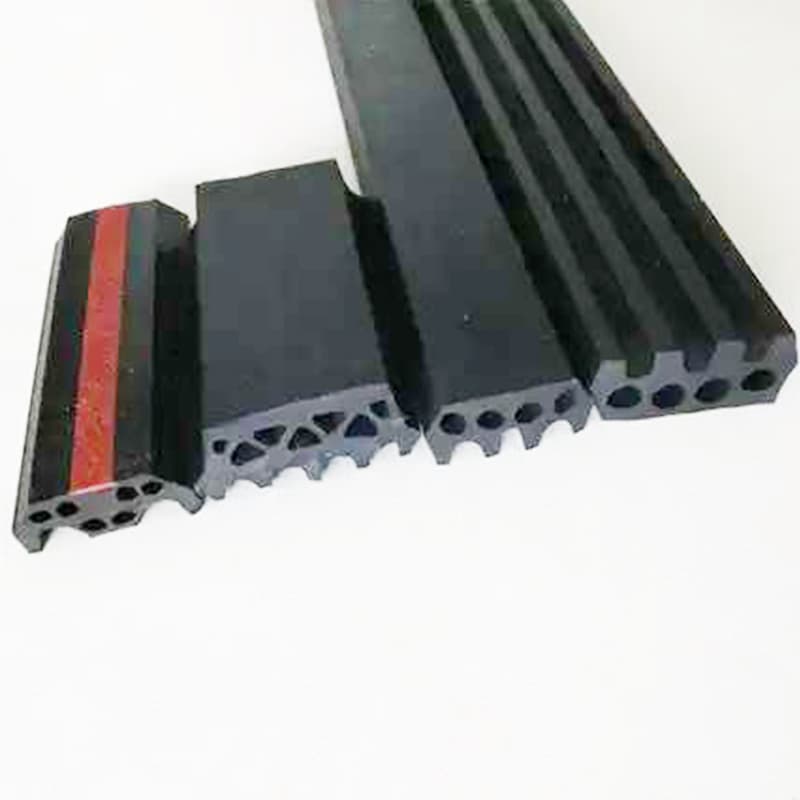
Cast Tunnel Segment Gaskets are directly molded and bonded onto the surface of precast concrete segments during the production phase. This process typically involves placing the gasket material into the mold before or during concrete casting, allowing it to integrate seamlessly with the segment.
Permanent bonding with concrete segments
High dimensional accuracy
Reduced risk of displacement during installation
Enhanced sealing consistency
Hongcan utilizes advanced molding technologies to ensure strong adhesion and uniform quality in cast Tunnel Segment Gaskets.
Since the gasket is already attached to the segment, there is no need for additional installation on-site. This significantly reduces labor time and potential installation errors.
The integrated design ensures precise positioning, minimizing the risk of misalignment that could compromise sealing performance.
The strong bond between the gasket and concrete reduces the likelihood of detachment, even under high stress or pressure conditions.
Higher initial manufacturing complexity
Less flexibility for on-site adjustments
Replacement can be more difficult if damage occurs
Non-cast Tunnel Segment Gaskets are manufactured separately and installed into preformed grooves in the concrete segments before tunnel assembly. They are typically inserted manually or using specialized tools.
स्वतंत्र (independent) gasket production
आसान replacement and maintenance
Flexible installation options
Compatibility with various segment designs
Hongcan offers a wide range of non-cast Tunnel Segment Gaskets designed for ease of use and high performance.
Non-cast gaskets can be installed or replaced on-site, providing greater flexibility during construction and maintenance.
Since they are produced separately, manufacturing processes can be optimized, often resulting in lower production costs.
If a gasket is damaged, it can be replaced without affecting the entire segment, reducing downtime and repair costs.
Risk of improper installation
Potential for displacement during segment assembly
Dependence on installation quality for performance
Cast gaskets are permanently bonded to the segment, while non-cast gaskets are installed separately. This fundamental difference affects installation, performance, and maintenance.
Cast: Pre-installed during manufacturing
Non-Cast: Installed on-site before assembly
Both types can achieve excellent sealing performance when designed correctly. However, cast gaskets often provide more consistent results due to their fixed position.
Non-cast gaskets have a clear advantage in terms of ease of replacement, while cast gaskets may require more complex repair procedures.
Cast gaskets may involve higher upfront costs due to integrated manufacturing, whereas non-cast gaskets offer more flexibility in budgeting and logistics.
High-precision projects requiring consistent quality
Large-scale tunnel construction with repetitive segment production
Environments with high water pressure where stability is critical
Projects requiring flexibility in installation
Situations where maintenance and replacement are priorities
Complex geometries where adjustments may be needed on-site
Hongcan works closely with clients to recommend the most suitable type of Tunnel Segment Gaskets based on project conditions.
Regardless of the type, the performance of Tunnel Segment Gaskets depends on:
Material quality (e.g., EPDM rubber)
Precision manufacturing
Proper compression design
Rigorous testing and quality control
Hongcan ensures that both cast and non-cast gaskets meet international standards and deliver reliable performance.
Modern Tunnel Segment Gaskets incorporate advanced features such as:
Multi-lip sealing systems for redundancy
Self-lubricating coatings for easier installation
Enhanced resistance to chemicals and aging
These innovations improve both cast and non-cast gasket performance, making them suitable for increasingly demanding tunneling projects.
Choosing between cast and non-cast Tunnel Segment Gaskets depends on project requirements, budget, and operational priorities. Cast gaskets offer superior integration and installation efficiency, while non-cast gaskets provide flexibility and ease of maintenance.
With extensive experience and technological expertise, Hongcan delivers high-quality Tunnel Segment Gaskets tailored to both approaches. By selecting the right gasket type and ensuring proper design and installation, tunnel projects can achieve optimal sealing performance and long-term reliability.
Copyright:@2020-2021

Comments Please sign in or sign up to post.
0
0 of 500 characters used